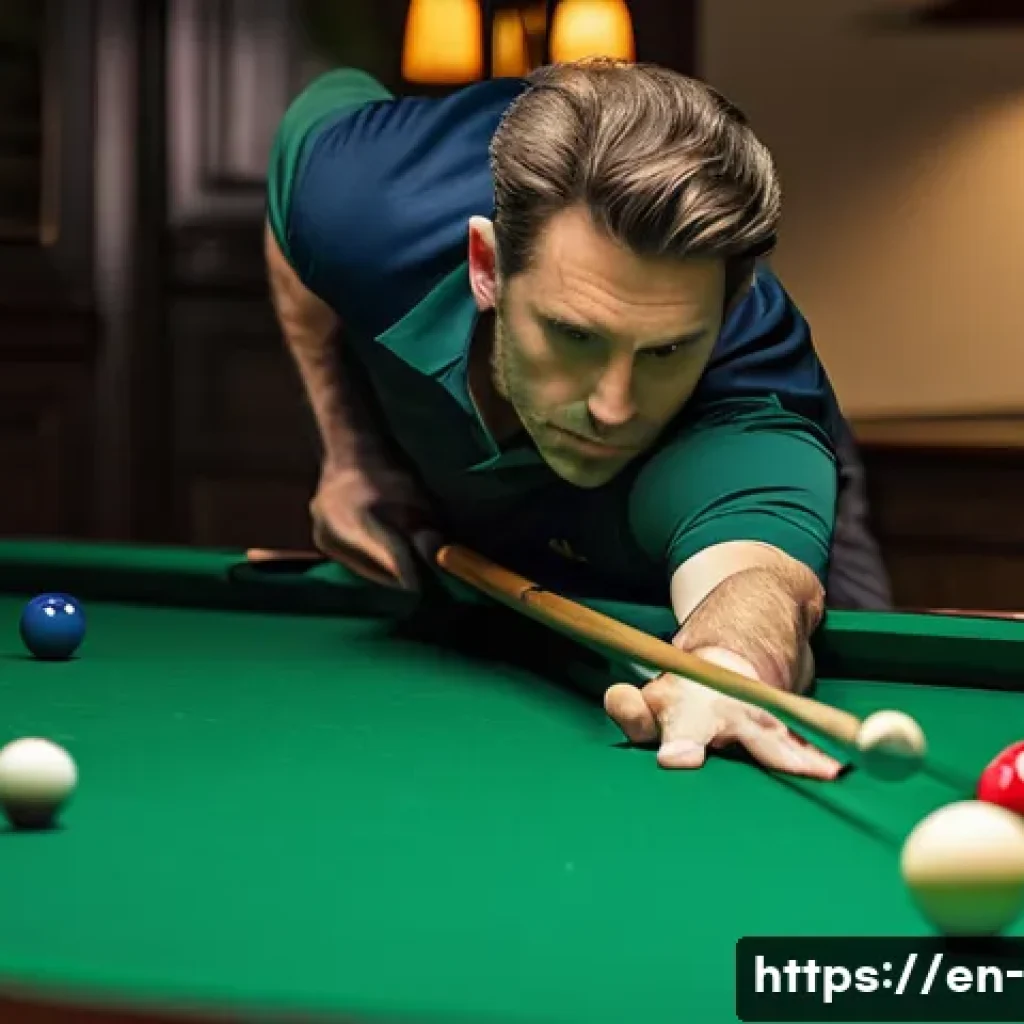
Ever walked into a lively pool hall, heard the satisfying crack of the break, and wished you knew how to join in, but felt a bit lost on where to even begin?
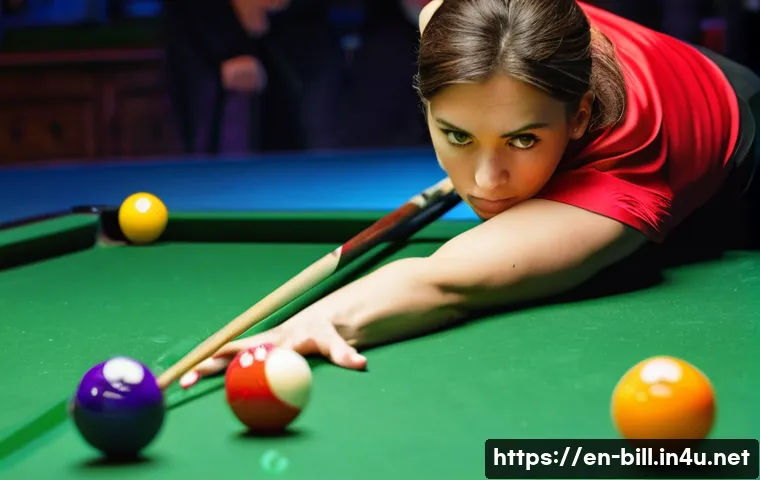
Believe me, I’ve been there! I remember my own wobbly first attempts with a cue, feeling a mix of excitement and total bewilderment. But that initial hurdle is exactly what we’re going to tackle today, because learning to play billiards isn’t just about sinking balls; it’s a fantastic way to sharpen your focus, meet new people, and dive into a super rewarding hobby that’s perfect for both casual fun and serious competition.
In a world increasingly focused on digital screens, grabbing a cue offers a wonderfully tactile and engaging escape. So, if you’re ready to transform from an admiring spectator into a confident player who can hold their own, let’s explore exactly how to master the game’s essential foundations!
Getting a Grip: Your First Connection to the Game
When I first started playing billiards, I honestly thought it was all about brute force, hitting the ball as hard as possible. Boy, was I wrong! The moment I truly began to understand the game, the very first fundamental shift for me was in how I gripped the cue and formed my bridge hand.
This isn’t just about holding a stick; it’s about establishing a stable, consistent connection between you and the cue ball, which is absolutely crucial for accuracy.
Think of it like a golfer’s swing or a pitcher’s throw – if your grip isn’t right, everything else is off. My personal breakthrough came when an old-timer at my local pool hall, a guy named Frank, showed me the open bridge.
He explained that a relaxed, stable bridge allows the cue to glide smoothly, minimizing unwanted deviations. It felt awkward at first, I won’t lie, but with practice, it became second nature, and suddenly, my shots weren’t veering off wildly anymore.
It’s like learning to hold a paintbrush correctly; it’s the foundation for every stroke that follows, ensuring precision and control. You’ll find that a consistent grip and bridge significantly reduce miscueing and give you a far better feel for the shot, building confidence with every successful strike.
The Essential Bridge Hand
Your bridge hand is essentially the guide for your cue stick, and getting it right is non-negotiable for consistent shots. I remember experimenting with a few types before settling on what worked best for me, but the most common and versatile is the open bridge.
To form it, place your hand flat on the table about 6-8 inches from the cue ball, then raise your fingers slightly, creating a V-shape with your thumb and forefinger.
This V is where your cue stick will rest and slide. For me, the trick was finding that sweet spot where my hand felt stable, but not tense. If your hand is too stiff, it restricts the cue’s movement, but too loose, and your shot loses direction.
I’ve seen countless new players, and honestly, even some seasoned ones, struggle because their bridge hand is sloppy. The key is to keep your fingers spread a little to create a solid base, and ensure your wrist is slightly elevated, giving you a better angle for your stroke.
Don’t be afraid to adjust it until it feels natural and secure. It’s truly a game-changer for control.
Holding the Cue: Comfort and Control
Now, let’s talk about how you actually hold the cue stick – your grip hand. This isn’t a death grip; it’s more like a firm handshake. Your fingers should wrap around the cue butt loosely enough to allow for a smooth pendulum swing, but firm enough to maintain control.
I distinctly recall tightening my grip in frustration after a few missed shots, only to find my accuracy plummeted even further. My friend, who’s a semi-pro, corrected me, saying, “Think of it like holding a bird, firm enough so it doesn’t fly away, but not so tight you crush it.” That analogy stuck with me.
You want your grip to be relaxed at the beginning of your stroke and only tighten slightly at the moment of impact and follow-through. The placement matters too: hold the cue further back for more power and follow-through, and closer to the tip for more finesse.
Experiment with what feels natural for you, but generally, your elbow should be directly above your wrist, forming a 90-degree angle when the cue tip is close to the cue ball.
This setup promotes a straight and true stroke, which is what we’re all after!
Finding Your Stance: The Foundation of Every Shot
Setting up your body correctly before even touching the cue ball is perhaps one of the most overlooked aspects for beginners, but it’s where truly consistent play begins.
I vividly remember my early days, hunching over the table like a question mark, my feet all over the place, and wondering why my shots were always going off course.
It took a while for me to realize that a stable, balanced stance isn’t just for comfort; it’s the bedrock of a repeatable stroke. When you find that sweet spot, where your body feels anchored and aligned, it’s like suddenly gaining superpowers of precision.
For me, it was less about mimicking a pro’s stance and more about finding what felt inherently stable for *my* body. It’s a bit like learning to stand on a surfboard – you need to find your center of gravity to stay upright and in control.
A good stance provides a solid base, minimizes unnecessary body movement during the stroke, and allows your aiming eye to align perfectly with the shot path.
It genuinely transforms your game from guesswork to calculated execution.
Balanced Footwork
Your feet are your anchors to the ground, and their placement directly impacts your stability and balance. The generally accepted method, and one that really clicked for me, is to have your dominant foot (the same side as your dominant eye) slightly forward and pointing towards the cue ball, with your other foot a bit wider, providing a solid base.
Picture yourself taking a small, comfortable step forward with your dominant foot. The distance between your feet should be roughly shoulder-width apart, ensuring you’re not too wide or too narrow.
My own journey involved a lot of shuffling and adjusting. I’d try standing too wide and feel awkward, then too close and feel wobbly. The key, as I discovered, is finding a stance that allows your shooting arm to swing freely without your body swaying or shifting.
Your weight should be evenly distributed, or slightly favoring your dominant side, allowing for a comfortable bend in your knees. It’s about feeling grounded and connected to the table, not rigid.
Body Alignment and Eye Dominance
Once your feet are set, the rest of your body needs to fall into a natural alignment that supports your aiming. This means your chin should be as close as comfortable to the cue stick, ideally directly over it, allowing your dominant eye to line up precisely with the shot.
This was another huge “aha!” moment for me. I used to keep my head too high, constantly struggling to see the shot clearly. Lowering my chin felt strange at first, almost like I was diving into the table, but the immediate improvement in my aiming was undeniable.
To figure out your dominant eye, you can do a simple test: form a small triangle with your hands, look through it at a distant object, then close one eye at a time.
The eye that keeps the object centered is your dominant one. Once you know, ensure that eye is aligned directly over the cue. Your shooting arm should hang naturally, forming a straight line from your shoulder to your elbow, and then down to your wrist.
This alignment minimizes any unwanted side-to-side movement and ensures your stroke is as straight as an arrow.
The Art of the Stroke: Precision in Motion
Mastering the stroke is where billiards transitions from hitting balls to truly playing the game with intention. I spent countless hours just practicing my stroke, initially just on the felt without any balls, and I can tell you, it makes all the difference.
It’s not about how hard you hit the ball, but how smoothly and consistently you execute the stroke. I recall watching professional players and being mesmerized by their seemingly effortless power and precision, realizing it wasn’t raw strength but refined technique.
The stroke is a fluid, pendulum-like motion that, when done correctly, sends the cue ball exactly where you intend. It’s a rhythmic dance between your arm, wrist, and hand, and once you get it, it feels incredibly satisfying.
My personal revelation came when I stopped trying to force the cue through the ball and instead focused on letting it swing naturally. That’s when I truly started to connect with the concept of a “soft touch” that still delivers immense power and control.
It transformed my game from erratic guesses to deliberate, calculated movements.
The Pendulum Motion
Think of your shooting arm as a pendulum, swinging freely from your shoulder. Your elbow acts as the pivot point, and your forearm swings back and forth, propelling the cue stick.
The key here, and something I struggled with initially, is to keep your upper arm and shoulder as still as possible throughout the stroke. My natural inclination was to use my whole arm, leading to wildly inconsistent shots.
Frank, my pool hall mentor, patiently explained that the power and direction come from the forearm’s controlled swing, not a shoulder heave. The backswing should be slow and deliberate, allowing you to focus on your aiming point, and then the forward stroke should be smooth and accelerating through the cue ball.
It’s not a jerky motion; it’s a continuous, fluid movement. Focus on that pendulum feeling, letting the cue stick do the work, and you’ll find your shots become much more consistent and powerful without extra effort.
It’s about efficiency, not brute force.
Follow-Through and Consistency
This is where many beginners, myself included, often fall short. We hit the cue ball and immediately stop our stroke, pulling the cue back. But the magic, the true consistency, happens *after* you’ve made contact.
Follow-through means continuing your stroke *through* the cue ball, allowing the cue tip to travel a few inches past the point of contact. I can’t stress enough how much this improved my game.
My shots instantly became straighter and more powerful, and I felt like I had more control over the cue ball’s path. It ensures that the cue tip stays aligned with your intended line of aim for as long as possible, imparting maximum energy and direction to the cue ball.
A good follow-through is also crucial for applying spin effectively, which we’ll discuss later. Consistency, then, comes from repeating this perfect pendulum motion with a strong follow-through every single time.
It’s not just muscle memory; it’s building a habit of precision.
Aiming for Success: Seeing the Angles
Ah, aiming! This is where the mental game of billiards really kicks in, and it can feel incredibly daunting when you’re first starting out. For a long time, I felt like I was just randomly hitting balls and hoping for the best, with very little understanding of how to reliably sink a shot.
It wasn’t until I learned to “see” the shot differently, to break it down into manageable components, that my accuracy truly began to improve. It’s not about superhuman vision; it’s about understanding geometry and physics, even if you don’t consciously think about the formulas.
My biggest hurdle was trusting my eyes and committing to the shot I saw, rather than second-guessing myself at the last second. It’s a skill that builds over time, much like learning to read the breaks on a golf course.
Once you start to grasp the fundamental concepts of aiming, you’ll feel a sense of empowerment, realizing that you can dictate the fate of the balls on the table rather than just reacting to them.
It’s a wonderful feeling when a complex shot clicks into place.
Understanding Ghost Ball Theory
This concept was a revelation for me! The “ghost ball” theory is probably the most widely taught aiming system, and for good reason – it works. Imagine a “ghost ball” (an imaginary cue ball) perfectly positioned on the table such that its center is directly on the line of aim for the object ball to go into the pocket.
Your goal is then to hit the real cue ball into the exact center of that ghost ball. When I first heard this, it sounded overly complicated, but after trying it a few times, it became crystal clear.
You’re not aiming at the object ball itself, but at a specific point *on* the object ball, or rather, where the cue ball needs to be to make contact with that point.
This visual aid simplifies the aiming process immensely. Instead of guessing, you now have a target within a target. It takes practice to visualize this phantom ball, but once you do, your aiming precision will skyrocket.
It helped me move beyond just “looking” at the pocket to actually “seeing” the path the object ball needed to take.
The Contact Point is Key
Building on the ghost ball concept, understanding the precise contact point on the object ball is paramount. This isn’t just about hitting the ball; it’s about hitting it *exactly* where you need to.
A full hit, a half-ball hit, a thin cut – each requires a specific contact point. For instance, to sink an object ball directly into a pocket without any side spin, you need to hit it exactly where the cue ball, if it were a ghost ball, would overlap the object ball by 50%.
A thinner cut means less overlap. My initial mistake was often misjudging this overlap, leading to frustrating misses. It’s a subtle difference, but that small margin dictates whether the ball goes in or kisses the rail.
Practice visualizing these contact points. Draw imaginary lines from the pocket through the object ball, and then mentally place the cue ball at the exact point of contact.
This mental exercise, coupled with repetitive shots, will train your eyes and hands to work in unison, making those seemingly impossible angles suddenly appear achievable.
Mastering the Cue Ball: Spin and Control
Okay, so you’ve got your grip, your stance, your stroke, and you’re starting to aim confidently. Now, it’s time to unlock the real magic of billiards: controlling the cue ball *after* it hits the object ball.
This is what separates casual players from those who can run a table. For me, learning about spin, or “English” as it’s often called, was like discovering a secret language that allowed me to dictate the flow of the game.
Before, the cue ball would just go wherever it wanted after a shot; now, I could make it stop, follow, draw back, or even curve around obstacles. It was exhilarating!
This level of control opens up entirely new strategies and allows you to set up your next shot perfectly, which is the hallmark of a truly skilled player.
It does take a lot of practice and a keen understanding of how different points of contact on the cue ball translate into specific movements, but trust me, the payoff is immense.
Applying English (Side Spin)
“English” refers to hitting the cue ball slightly off-center to impart side spin. Hit it on the left, and it gets left spin; hit it on the right, and it gets right spin.
This spin influences how the cue ball reacts off cushions and how it reacts *after* hitting an object ball. My first few attempts at English were disastrous – I’d miscue constantly.
The trick, I learned, is to keep your stroke straight even when hitting off-center. If you veer your cue to the side, you’ll miscue every time. Applying English makes the cue ball “hug” the rail more tightly or “bounce” off more widely, depending on the spin and angle.
It’s also crucial for controlling the tangent line after impact. For example, if you hit an object ball with left spin on the cue ball, the cue ball will tend to travel more to the left after impact.
It’s a complex dance, but practicing simple shots with varying amounts of side spin will quickly build your intuition.
Draw, Follow, and Stop Shots
Beyond side spin, controlling the vertical spin on the cue ball is vital for positional play.
| Shot Type | Cue Ball Contact Point | Cue Ball Reaction After Object Ball Contact | When to Use (My Experience) |
|---|---|---|---|
| Stop Shot | Low center (just below the midline) | Stops almost immediately after hitting the object ball. | Perfect for leaving the cue ball in a convenient spot for the next shot, or when you don’t want to disturb other balls. It’s a control shot. |
| Follow Shot | High center (just above the midline) | Rolls forward after hitting the object ball. | Great for advancing the cue ball up the table for a subsequent shot, or creating an angle for a bank shot. I use this a lot to get better position. |
| Draw Shot | Very low on the cue ball | Spins backward and retreats after hitting the object ball. | Incredibly useful for pulling the cue ball back for a specific setup, or getting out of a tricky situation where you need to avoid pockets or other balls. It’s tough to master but so rewarding. |
Each of these requires a precise contact point on the cue ball. For a draw shot, you hit low on the cue ball, causing it to spin backward and literally “draw” back after hitting the object ball.
I remember the sheer joy when I first executed a perfect draw shot; it felt like magic! For a follow shot, you hit high, making the cue ball continue forward.
And for a stop shot, hitting slightly below the center allows the cue ball to stop dead in its tracks. The amount of spin you impart depends on how far from the center you hit and the speed of your stroke.
It’s all about practice and understanding how these different contact points translate into predictable cue ball movement.
Strategic Play: Thinking Several Shots Ahead
Once you’ve got the basic mechanics down, billiards transforms from a series of individual shots into a captivating strategic game. This is where I truly fell in love with it.
It’s no longer just about sinking the ball in front of you; it’s about thinking two, three, even four shots ahead, planning your escape routes and setting up your next move.
My early games were a chaotic mess of sinking one ball, then having no idea where to go next, often leaving myself in impossible positions. It was incredibly frustrating!
But then I started observing better players, watching how they meticulously placed the cue ball for their next shot, even if it meant taking a slightly harder shot now.
This shift in mindset, from reactive to proactive, was a game-changer for me. It’s like playing chess on a green felt board, constantly evaluating risks and rewards, and it adds an incredible layer of depth to the game that keeps you hooked.
Positional Play Basics
Positional play is essentially controlling where the cue ball ends up after each shot, aiming to leave it in the best possible spot for your *next* shot.
This means considering angles, speed, and spin. When I started focusing on this, my game improved exponentially. Instead of just sinking the obvious ball, I’d ask myself: “If I sink this ball, where will the cue ball go?
Will it set me up for another shot, or leave me snookered?” Sometimes, it even means intentionally missing a ball if it helps you get a better position for a different ball later.
Learning to gauge the cue ball’s path off rails and after object ball contact is crucial. For instance, if you have a ball near a pocket, but the next ball you want to shoot is on the other side of the table, you might use a follow shot to send the cue ball across the table, or a draw shot to bring it back to the middle.
It’s about creating a chain reaction of successful shots.
Safety Shots and Breakdowns
Not every shot can be a pocketing shot, and that’s where safety shots come in. A safety shot is when you intentionally don’t try to pocket a ball, but instead, you play the cue ball or an object ball to a position that makes it difficult for your opponent to make their next shot.
I used to feel like a “chicken” for playing a safety, but experienced players taught me it’s a vital strategic tool. Sometimes, the best offense is a good defense!
For example, you might hide the cue ball behind another ball, or push an object ball to a position where it’s hard to reach. Breakdowns are another strategic element.
This involves intentionally leaving a cluster of balls in a way that makes it easier to break them apart and pocket them on a subsequent turn. It’s about creating opportunities and minimizing risks.
Learning when to play it safe and when to go for the big shot is a skill that comes with experience, but it’s invaluable for winning games.
Practice and Progression: Honing Your Skills
Let’s be real, no one becomes a pool shark overnight. My journey in billiards has been a winding road of small victories and frustrating plateaus, but the one constant has been the power of consistent practice.
It’s not just about mindlessly hitting balls; it’s about focused, intentional practice that targets your weaknesses and reinforces your strengths. I remember feeling so overwhelmed by all the techniques initially, trying to master everything at once.
That’s a surefire way to get discouraged! My biggest breakthrough came when I started breaking down my practice sessions into manageable drills, focusing on one aspect at a time.
It’s like going to the gym – you don’t just randomly lift weights; you have a routine that targets specific muscle groups. And just like in any skill, celebrating small improvements kept me motivated.
The satisfaction of finally making that draw shot I’d been struggling with, or consistently pocketing a difficult cut shot, is incredibly rewarding and fuels the desire to keep getting better.
Effective Drill Routines
So, how do you practice effectively? Structured drills are your best friend. Instead of just randomly playing games, dedicate a portion of your practice time to specific exercises.
For example, I’d often start with simple straight-in shots to warm up and reinforce my basic stroke. Then, I’d move to aiming drills, placing object balls at various angles around the table and trying to pocket them consistently.
Another favorite of mine is the “stop shot drill,” where I try to pocket an object ball and make the cue ball stop dead in its tracks. This really hones your touch and cue ball control.
Don’t forget about bank shots and kick shots; these are often neglected by beginners but are crucial for getting out of tough spots. There are tons of resources online and in books with detailed drill routines.
The key is repetition and self-correction. Film yourself if you can; you’d be surprised what you notice about your stance or stroke that you can’t feel in the moment.
Learning from Every Game
Every game you play, whether it’s a casual friendly match or a more competitive league game, is a learning opportunity. I used to get so frustrated after losing, completely overlooking what I could learn from my mistakes.
Now, win or lose, I try to reflect on the game. “What went wrong on that shot?” “Could I have played a better safety?” “Did I misjudge the speed?” Asking these questions helps you identify recurring issues and areas for improvement.
Don’t be afraid to ask more experienced players for advice either. I’ve found that most pool players are incredibly generous with their knowledge, and a quick tip from someone who’s been playing for decades can shave months off your learning curve.
Even watching professional games, paying attention not just to the shots they make but *why* they make them and how they set up their next shot, can be incredibly insightful.
Treat every game as a lesson, and your progression will be steady and satisfying.
Beyond the Basics: Etiquette and Enjoying the Game
While mastering the technical aspects of billiards is undeniably crucial, there’s another layer to truly enjoying the game and becoming a respected player: understanding the etiquette and embracing the social side.
I learned pretty quickly that pool halls aren’t just places to sink balls; they’re social hubs, communities where people gather, compete, and share a common passion.
My early focus was so intensely on my own performance that I sometimes forgot the human element. But as I spent more time around the tables, I started picking up on the unwritten rules, the unspoken courtesies that make the game so much more enjoyable for everyone involved.
It’s about respecting the game, your opponents, and the shared space. And honestly, once you start feeling comfortable with the basics, allowing yourself to relax and soak in the atmosphere is when the real fun truly begins.
It’s about building connections, sharing laughs, and simply appreciating the shared experience of a well-played game.
Respecting the Table and Your Opponent
Good etiquette begins with respecting the playing surface. Always avoid leaning on the table when it’s not your shot, and never sit on it. Remember, it’s a delicate piece of equipment.
My friend once accidentally spilled a drink on a table – trust me, you don’t want to be that person! Keep chalk away from the felt, and make sure to return the cue stick to the rack after your turn.
When it comes to your opponent, always be courteous. Don’t talk or move around excessively when they’re shooting, as it can be distracting. A simple “good shot” or “tough break” goes a long way in fostering a friendly atmosphere.
I’ve found that even in competitive games, a little sportsmanship makes the whole experience much more pleasant and rewarding. It’s about playing hard, but fair, and appreciating the skill of the person across the table from you.
Embracing the Social Scene and Continued Learning
One of the most wonderful aspects of billiards is its social dimension. Pool halls are fantastic places to meet new people, from casual players to seasoned pros.
I’ve made some great friends just by striking up conversations over a game or two. Don’t be shy; ask questions, compliment good shots, and offer to play a friendly match.
Many pool halls also have leagues or tournaments that are a fantastic way to improve your game in a supportive, yet competitive, environment. Joining a league was one of the best decisions I made; it pushed me to practice more, learn new strategies, and connect with a community of enthusiastic players.
The learning journey in billiards never truly ends. There’s always a new shot to master, a new strategy to explore, or a new tip to pick up. Keep an open mind, enjoy the process, and you’ll find yourself not only becoming a better player but also deeply immersed in a truly engaging and rewarding pastime.
Closing Thoughts
It’s truly incredible how much depth and joy a game like billiards can offer once you move beyond just pushing balls around. From those initial awkward grips and shaky stances to the satisfying thud of a perfectly executed draw shot, every step of this journey has been a lesson in patience, precision, and a surprising amount of self-discovery.
I remember the pure satisfaction the first time a shot went exactly where I intended, not by luck, but by understanding the mechanics we’ve talked about.
This game isn’t just about technique; it’s about building confidence, enjoying the camaraderie, and appreciating the subtle artistry of every shot. Keep practicing, stay curious, and most importantly, have a blast at the table!
Useful Information to Know
1. Regular Cue Maintenance is Key: Just like any precision instrument, your cue stick benefits from a little TLC. Make sure to keep your shaft clean by wiping it down regularly after playing, especially if you use a lot of chalk. A smooth shaft ensures a consistent stroke. Also, check your cue tip often; a worn-out or misshapen tip can lead to frustrating miscues and inconsistent play. Replacing a tip might seem daunting, but it’s a skill worth learning or having a pro handle. A well-maintained cue truly feels like an extension of yourself and significantly impacts your shot quality.
2. Don’t Underestimate the Power of Chalk: Chalk might seem like a small detail, but it’s absolutely vital for preventing miscues and imparting spin. Always chalk your cue tip thoroughly before every shot. I used to just haphazardly dab it, but a complete and even coat makes all the difference. It provides the friction needed for the cue tip to grip the cue ball, whether you’re hitting dead center or applying heavy English. Keep your chalk cube clean and try to use a good quality brand – it truly impacts the consistency of your game and helps reduce those embarrassing slips.
3. Invest in a Quality Cue Stick (When Ready): While you can learn a lot with a house cue, eventually, investing in your own cue stick can dramatically improve your consistency and feel for the game. You don’t need to break the bank, but a decent entry-level cue that feels balanced and straight can make a world of difference. The weight, balance, and taper of a personal cue become familiar, allowing for more consistent strokes. I noticed a huge jump in my play once I found a cue that truly resonated with me, making practice more enjoyable and shots more reliable.
4. Learn from Watching Others (and Pros!): One of the fastest ways to improve is by observing skilled players. Spend time watching more experienced players at your local pool hall or even stream professional tournaments online. Pay attention not just to *what* shots they make, but *how* they execute them – their stance, their bridge, their stroke, and especially their positional play. Try to understand their thought process, how they set up for the next shot, and what safeties they employ. I’ve picked up countless little tricks and strategic insights just by being an attentive observer.
5. Join a Local League or Club: There’s nothing quite like the structured environment of a league or club to accelerate your learning. It provides regular opportunities to play, often against players of varying skill levels, pushing you to adapt and improve. The competitive aspect helps you handle pressure, and the camaraderie offers a great support system for learning. Plus, you often get access to experienced players who are willing to share tips and drills. My league experience truly transformed my game and connected me with an amazing community that shares my passion for billiards.
Key Takeaways
Embarking on the billiards journey is an incredibly rewarding experience, and getting the fundamentals right is paramount to consistent success and enjoyment. Remember that a stable grip and a consistent bridge hand are your foundational connection to the cue ball, ensuring precision in every shot. Your stance provides the essential balance and alignment, allowing for a fluid, pendulum-like stroke that dictates the cue ball’s path and power. Mastering aiming systems like the ghost ball theory will dramatically enhance your shot selection and accuracy, transforming guesswork into calculated execution. Furthermore, understanding how to apply spin – through draw, follow, and English – unlocks the strategic dimension of the game, enabling effective positional play and setting up future shots. Finally, consistent, focused practice through drills and learning from every game, coupled with good etiquette and a healthy dose of fun, will solidify your skills and deepen your appreciation for this timeless game. It’s a continuous learning curve, but every small improvement brings immense satisfaction and propels you further into the art of the game.
Frequently Asked Questions (FAQ) 📖
Q: I’m just starting out and feel completely overwhelmed! What’s the very first thing I should actually focus on before trying to sink a single ball?
A: Oh, I totally get that feeling of being a bit swamped when you first step up to the table! It’s like trying to learn to drive by immediately speeding down the highway.
My biggest piece of advice, and something I truly wish someone had drilled into me earlier, is to absolutely nail your stance and bridge. Seriously, before you even think about hitting a ball with any real force, spend some time just getting comfortable with how you stand.
You want a stable base, right? Imagine trying to throw a dart accurately if your feet are all over the place. It’s the same here!
For your stance, aim for something balanced, where you feel grounded and can swing your arm freely. And that bridge hand? It’s like the tripod for a camera – it needs to be steady, firm, and consistent.
Experiment with an open bridge or a closed bridge to see what feels natural for you, but make sure it creates a stable cradle for your cue. I remember countless frustrating shots early on that went nowhere near where I wanted, and looking back, almost all of them came down to a wobbly stance or a sloppy bridge.
Once you lock those down, you’ll be amazed at how much more control you suddenly feel. Trust me, it’s worth the initial patience!
Q: Do I really need to buy my own expensive pool cue right off the bat, or can I just use the ones at the pool hall? I don’t want to invest a ton if I’m not sure I’ll stick with it.
A: That’s a fantastic question, and one I hear all the time from folks dipping their toes into the game! And let me tell you, absolutely NOT. Please, please don’t rush out and drop a hefty sum on a cue when you’re just starting.
Think of it like learning to ride a bike – you don’t buy a custom-built road racer for your first lesson, right? Most reputable pool halls and even local bars with tables have house cues that are perfectly adequate for beginners.
In fact, sometimes a good quality house cue is far better than a cheap, entry-level cue you might buy online. Focus on learning the fundamentals with whatever cue is available.
Get a feel for the game, understand the mechanics, and see if billiards truly sparks that passion in you. If, and only if, you find yourself hooked (which I bet you will!), then you can start looking into getting your own cue.
That’s when the fun of choosing your personal instrument really begins, knowing it’s an investment in a hobby you genuinely love. Until then, save your cash and just enjoy playing!
Q: Besides the actual playing, how can I find other people to play with or even take some lessons? It feels a bit intimidating just walking into a busy pool hall alone.
A: Oh gosh, that feeling of walking into a bustling pool hall solo can definitely be a bit much at first! I totally relate – my first few times, I felt like I had “beginner” stamped right on my forehead.
But here’s the wonderful truth: the billiards community is usually incredibly welcoming! First off, check out local pool halls or community centers; many of them offer beginner-friendly leagues or even “learn to play” nights.
Those are goldmines for meeting people at your skill level. Don’t be shy about asking the staff if they know of any coaching available, or if there are specific nights when more casual players gather.
Sometimes just hanging out and watching, and then asking a friendly-looking player if they wouldn’t mind a quick game, can open doors. You’d be surprised how many experienced players love sharing their knowledge!
I’ve personally made some great friends just by striking up a conversation over a shared love for the game. Online, local Facebook groups or meet-up apps for sports and hobbies can also be surprisingly effective.
Just search for “billiards” or “pool” in your area. The key is to put yourself out there a little bit. That initial step might feel like a big one, but the rewards of new friends and shared fun are absolutely worth it.